
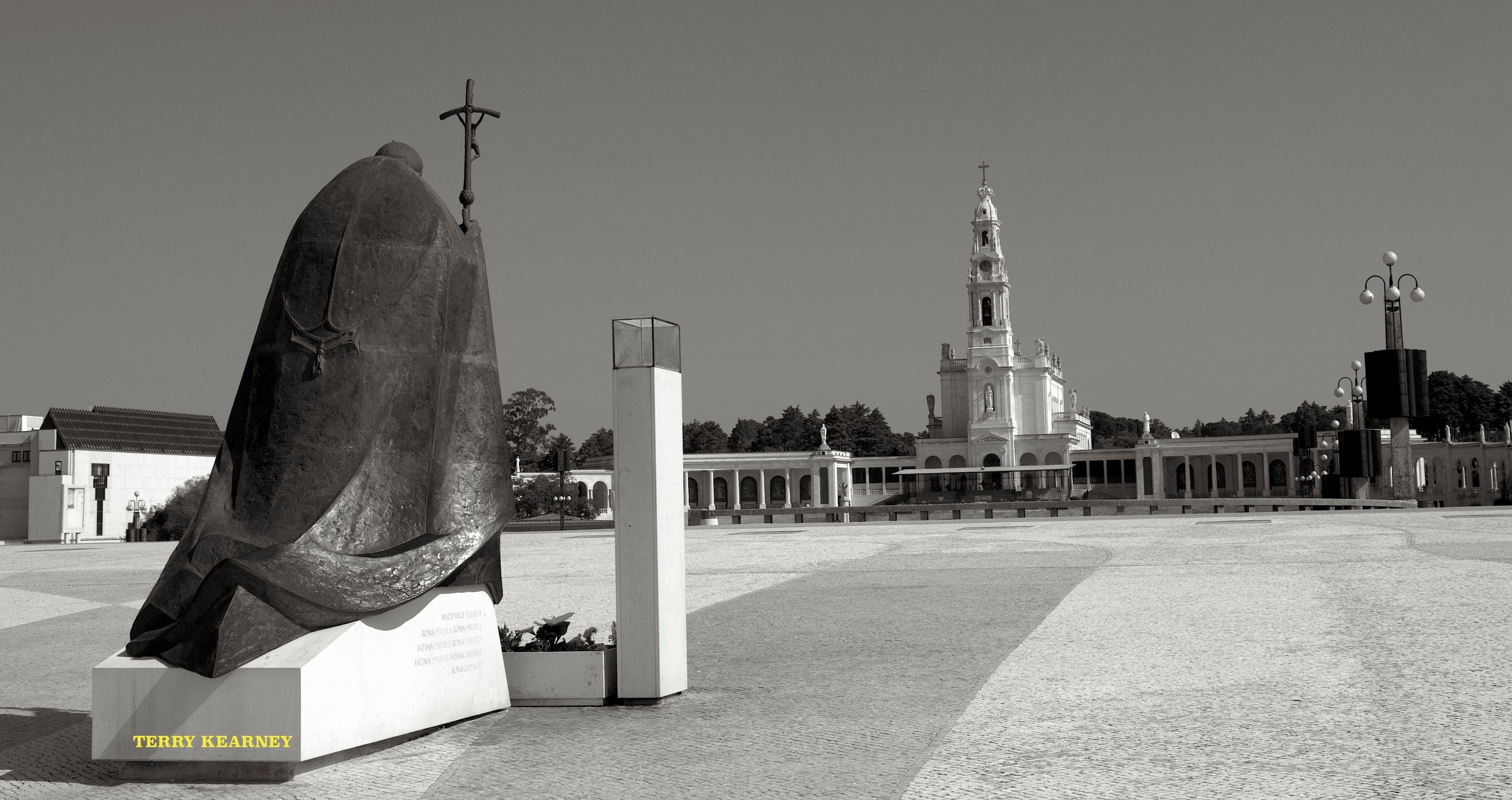
What is Fátima and why do people visit?
Fátima is a small town in central Portugal that became one of the world's most important Catholic pilgrimage sites following events in 1917. Three shepherd children — Lúcia, Francisco and Jacinta — reported a series of apparitions of the Virgin Mary between May and October of that year. The Marian shrine built on the site now attracts four to six million visitors annually, from devout pilgrims who travel on their knees across the esplanade to curious tourists who come simply to understand what makes this place so significant.
You do not need to be Catholic, or even religious, to find Fátima moving. The sheer scale of the sanctuary, the atmosphere during feast days, and the stories behind the shrine are genuinely compelling for anyone interested in history, culture, or human experience.
What to see at the Sanctuary of Fátima
The Basilica of Our Lady of the Rosary
The white neo-Baroque basilica at the top of the esplanade was completed in 1953. Its 65-metre tower is visible from much of the surrounding countryside. Inside, the tombs of Francisco and Jacinta Marto (two of the three seers) are among the most visited spots in the sanctuary. The basilica is free to enter.
Chapel of the Apparitions
Built on the exact spot where the apparitions reportedly took place, the Chapel of the Apparitions (Capelinha das Aparições) is the spiritual heart of the sanctuary. It is a small, open-sided structure surrounded by a canopy and perpetually busy — pilgrims light candles here at all hours. The small oak tree that stood here at the time of the apparitions was stripped of its branches by early pilgrims as relics; a holm oak in its place marks the approximate spot.
The Basilica of the Holy Trinity
The modern Basilica of the Holy Trinity, completed in 2007, sits at the opposite end of the esplanade from the old basilica. It can accommodate 9,000 people and is one of the largest churches in the world. The contemporary architecture is deliberately minimalist — a contrast to the ornate old basilica — and the interior contains impressive mosaic work.
The esplanade
The esplanade connecting the two basilicas stretches 600 metres and is deliberately wider than St Peter's Square in Rome. On ordinary days it feels vast and peaceful; on pilgrimage dates — particularly 12–13 May and 12–13 October — it fills with hundreds of thousands of pilgrims. Some arrive on their knees, a traditional form of penitential pilgrimage that can be witnessed at almost any time.
When to visit
The most important pilgrimage dates are the 12th and 13th of May (anniversary of the first apparition) and October (anniversary of the final apparition and the "Miracle of the Sun"). These dates draw the largest crowds — hundreds of thousands — and the atmosphere is extraordinary. Book accommodation and transport weeks in advance if you plan to visit on these dates.
For a more peaceful visit, any other time of year is suitable. Fátima receives visitors year-round; the sanctuary is open daily. Mornings are quieter than afternoons, and weekdays quieter than weekends.
How to get from Lisbon to Fátima
There is no direct train to Fátima. The nearest train station is Caxarias (on the Entroncamento line), from where you need a taxi or bus to the sanctuary — adding 30–45 minutes to the journey. Coaches from Sete Rios bus station run several times daily and take about 90 minutes directly to the sanctuary; the return journey requires careful attention to the schedule.
For most visitors — especially groups, families, or those combining Fátima with other destinations — a private transfer or tour is the most practical option. Your driver picks you up at your hotel, takes you directly to the sanctuary, and returns at whatever time suits your visit.
Lisbon → Fátima private transfer
Door-to-door · ~1h 30min · tolls included
Combining Fátima with Nazaré and Óbidos
Fátima, Nazaré and Óbidos lie on a natural loop north of Lisbon that makes a superb full-day itinerary. Start in Fátima in the morning (40 minutes from the sanctuary gives enough time for a meaningful visit), drive 45 minutes northeast to Nazaré for lunch by the sea, then 40 minutes south to Óbidos for the afternoon before returning to Lisbon. Three completely different experiences in one coherent day.
View the full-day tour →