

Lisbon rewards the people who get a little lost in it. The city's hills, miradouros (viewpoints), and neighbourhoods each have a distinct character — and a lot of what makes Lisbon special is best discovered on foot, slowly. But before you wander, it helps to know where you are.
The neighbourhoods worth knowing
Alfama — the oldest and most characterful
Alfama is the Moorish heart of Lisbon — a labyrinth of steep lanes, tiled staircases and white houses tumbling down to the Tagus. It survived the 1755 earthquake largely intact, making it the most historically continuous neighbourhood in the city. The São Jorge Castle sits above it; the Miradouro da Graça and Miradouro de Santa Luzia offer the best panoramic views. This is also where you'll hear authentic Fado — Lisbon's melancholic folk music — in the evening.
Belém — monuments and pastéis
Belém is where Lisbon's Age of Discovery monuments are concentrated. The Torre de Belém (a 16th-century fortified tower on the Tagus) and the Jerónimos Monastery (a UNESCO World Heritage building of astonishing scale and detail) are the main draws. A 15-minute tram or Uber ride from the centre. And next door: Pastéis de Belém, the original home of the pastel de nata. The queue is worth it.
Baixa and Chiado — the elegant centre
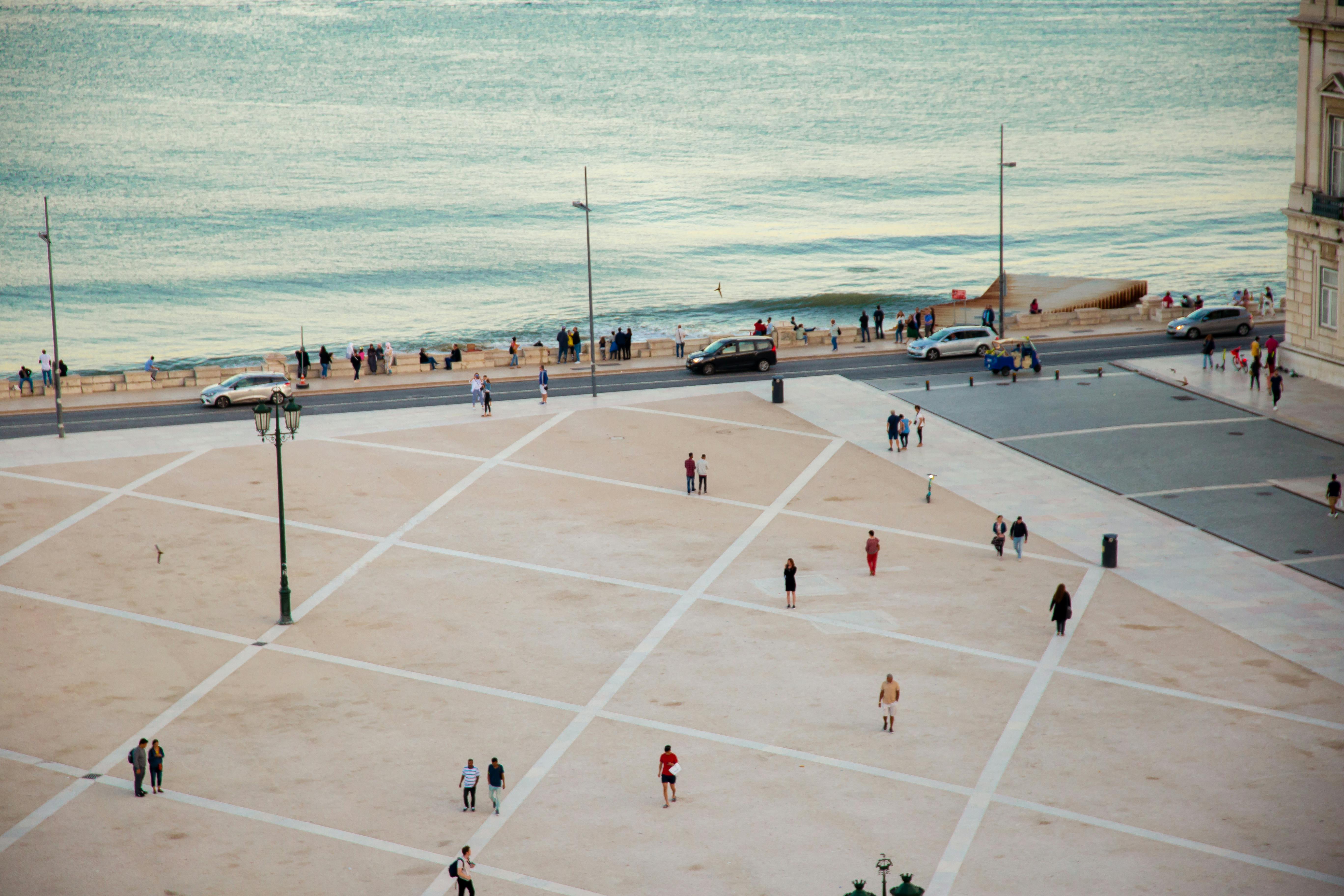
Baixa is Lisbon's formal downtown — rebuilt in a Pombaline grid after the 1755 earthquake, with wide pedestrian streets and Praça do Comércio opening onto the Tagus. Chiado, just uphill, is the cultural and bohemian counterpart: bookshops, theatres, good coffee, and the Mercado do Chiado. Between them, they cover most of what first-time visitors picture when they think of Lisbon.
LX Factory — the creative quarter
LX Factory occupies a 19th-century industrial complex in Alcântara, now converted into a creative village of restaurants, shops, studios and event spaces. It's lively on weekends (Sunday market is popular) and a good alternative to the tourist-heavy Chiado. The Sunday market runs approximately 10am–6pm.
The viewpoints — miradouros
Lisbon has seven hills and a corresponding number of viewpoints. The most visited are Miradouro da Graça (quieter, beautiful morning light, views over the castle and Alfama), Miradouro de Santa Catarina (afternoon sun, views of the Tagus and Ponte 25 de Abril), and Miradouro de São Pedro de Alcântara (central, easy to reach, with an orientation panel). None require tickets — they're all public spaces.
What to eat in Lisbon
- Pastel de nata — custard tart, best warm, at Pastéis de Belém or Manteigaria in Chiado
- Bacalhau — salt cod, Portugal's national dish, prepared in over 365 ways
- Bifanas — pork steak sandwiches, the best fast food in the city
- A Ginjinha — cherry liqueur shot, served at the tiny bar on Largo de São Domingos since 1840
- Prego — steak sandwich, best at Cervejaria Ramiro or Solar dos Presuntos
Getting around Lisbon
Lisbon's public transport network is extensive but has some quirks. The metro is efficient for longer journeys. Trams (especially the famous Tram 28) are slow and extremely crowded with tourists — take them for the experience but not for efficiency. Uber and Bolt work very well and are cheaper than most European capitals. For the hills, accept that you'll walk up them — it's part of the experience.
Arriving in Lisbon?
Private airport transfer from €29.90. Driver meets you at arrivals, takes you directly to your hotel.
Day trips from Lisbon — leave the city too
Lisbon is best experienced as a base for exploring the wider region. Most visitors who focus exclusively on the city leave wondering why everyone raves about Portugal so much — the country's real magic is in the variety. Sintra, Cascais, Fátima, Nazaré, Évora: each one adds a completely different dimension to a Portugal trip.